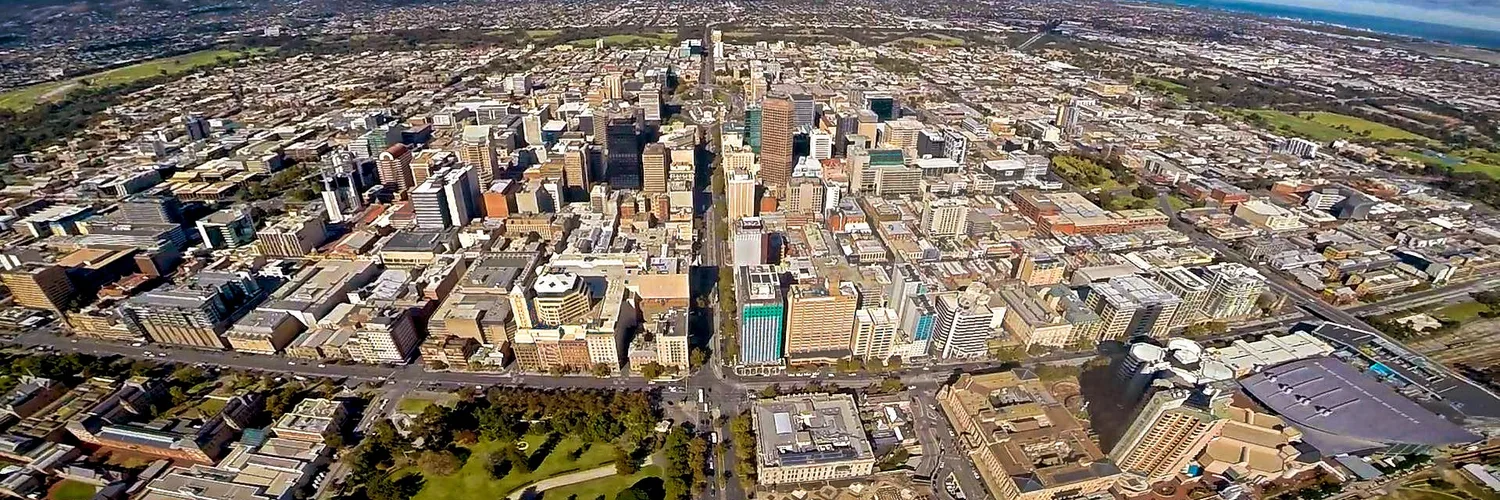
Adelaide’s median dwelling value was $937,207 at 31 August 2026, up 8.6% over the year, on Cotality’s Home Value Index. Values fell 0.8% in August and 1.6% over the quarter, leaving Adelaide 1.6% below its May 2026 peak. That is a mild pullback. Sydney and Melbourne values are down 4.6% and 4.7% over the year.
Adelaide’s vacancy rate was 0.64% in August 2026 (SQM Research), down from 0.76% in January and 0.67% in March. Tenants still have very little choice. The fundamentals underneath remain strong.
The Australian Submarine Agency’s 4 September 2026 update added a further $4.6 billion for the Osborne submarine construction yard. That takes the government’s total investment in the yard to $8.5 billion. Groundworks on the Skills and Training Academy campus began in 2025. The North-South Corridor’s River Torrens to Darlington section is under construction and due to open in 2031.
Greater Adelaide’s house median was $1,008,736 in June 2026 and $999,091 at 31 August, just back under $1 million (Cotality). But the median is skewed by inner-ring suburbs most investors aren’t buying in. The nine suburbs below have house medians from $560,000 to $833,000. Their computed gross yields run from 3.80% to 4.46%.
The best suburbs to invest in Adelaide right now sit across three corridors: the northern defence and infrastructure run, the inner west and the southern coastal pocket. Nine suburbs below were refreshed against CoreLogic data to 30 June 2026 and rents to 31 August 2026. We selected them on median, gross yield, vacancy, infrastructure pipeline and employment diversity.
Elizabeth
Median house price: ~$671,000 Gross rental yield (houses): ~3.80% 12-month growth: ~18.76%
Elizabeth has run hard. Twelve months ago the suburb’s house median was in the high $500,000s. It reached $671,000 by June 2026 after 18.76% annual growth. That figure rests on only 14 house sales. It is the suburb most directly tied to the defence pipeline, even though Elizabeth North and Elizabeth South now offer lower entry points. The Osborne Naval Shipyard lies south-west, on the Lefevre Peninsula. The Edinburgh RAAF Base and Edinburgh Defence Precinct sit right next door.
Yields have compressed with the price run. A $490 weekly rent against the $671,000 median computes to 3.80% gross. The tenant pool hasn’t changed. Defence workers, logistics staff and healthcare workers from the nearby Lyell McEwin Hospital still fill it. Postcode 5112 read 0.76% vacancy in August 2026, slightly above Adelaide’s 0.64%.
Elizabeth has historically been unfashionable. The older medians reflected that discount. The Osborne construction yard, the Skills and Training Academy campus and the depth of the Edinburgh precinct are structural drivers. They have changed the maths in 18 months. Our comparison of affordable and blue-chip property covers the trade. Elizabeth has been one of the clearest examples in Adelaide.
The Playford Alive urban renewal precinct continues to lift parts of the Elizabeth corridor with new housing and amenity. Buy in the established parts with older houses on decent blocks, rather than the newer project homes on small lots.
Davoren Park
Median house price: ~$610,000 Gross rental yield (houses): ~4.26% 12-month growth: ~15.09%
Davoren Park sits in the Playford corridor, immediately north of Elizabeth. It shares the same defence employment proximity. Postcode 5113 read 0.92% vacancy in August 2026, down from 1.35% in March.
The suburb posted 15.09% growth in the year to June 2026 as investors and owner-occupiers competed for affordable stock in Adelaide’s north. At a $610,000 median and $500 a week, the gross yield computes to 4.26%. The cash flow profile stays manageable on an IO loan.
Houses here tend to be older brick on larger blocks. That’s the profile that works for investors. The houses are structurally sound, visually dated and ready for a cosmetic reno that can add equity. For how that equity extraction process works across a portfolio, see our portfolio building guide.
The risk is perception and tenant quality. Davoren Park doesn’t have the demographic profile of Mawson Lakes or Prospect. At these yields and entry points the numbers compensate. Just go in eyes open.
Salisbury North
Median house price: ~$660,000 Gross rental yield (houses): ~4.33% Median weekly rent: ~$550 12-month growth: ~10.00%
As the northern corridor’s hub, Salisbury has the Salisbury Interchange connecting rail and bus. The North-South Corridor runs close by. Parabanks Shopping Centre anchors the retail precinct. The electrified Gawler Line runs through the suburb with direct rail access to the CBD.
At $660,000 with a 4.33% yield and $550 per week rent, Salisbury North is still affordable and sits close to major transport and jobs. Postcode 5108 read just 0.52% vacancy in August 2026. The broader Salisbury SA3 area had an $804,482 median and 10.4% annual growth to August 2026 (Cotality). That ranks sixth in Greater Adelaide. At June 2026 it ranked first, with growth running at 16.1%.
The investment case here is proximity to three major employment nodes: the Edinburgh Defence Precinct, the Mawson Lakes technology and university precinct, and the Osborne shipyard corridor. That employment diversity is what separates Salisbury from single-industry suburbs. Healthcare, defence, education, retail, and logistics all contribute to the tenant pool.
Target the established residential streets over newer infill. Older houses on larger blocks with reno potential are the play.
Munno Para
Median house price: ~$665,000 Gross rental yield (houses): ~4.46% Median weekly rent: ~$570 12-month growth: ~10.83%
Munno Para has been a steady northern corridor performer. Its house median rose 10.83% in the year to June 2026, on a five-year average of 17.26% a year. At $570 a week against a $665,000 median, the gross yield computes to 4.46%. That ties Elizabeth South for the best yield on this list.
The suburb sits in the Playford LGA. It benefits from the same defence and infrastructure spending as Elizabeth and Davoren Park. The Northern Expressway provides fast road access south toward Osborne and the CBD. Local employment is anchored by the Munno Para Shopping City and surrounding light industrial precincts.
Worth flagging: parts of the Munno Para area include newer masterplanned estates with smaller lots. For investment, focus on the established parts with older housing stock on decent blocks. The newer project homes on small lots don’t give you the reno potential or future optionality that larger blocks provide.
Woodville Gardens
Median house price: ~$820,000 Gross rental yield (houses): ~4.00%
Woodville Gardens pairs a 4.00% house yield with an inner-western address. It is the closest suburb to the CBD on this list.
The unusual combination here is yield plus proximity. A $630 weekly rent on an $820,000 median puts it in line with several outer suburbs on this list, despite the shorter commute. That means a broader tenant pool and more resilient demand than the outer suburbs. CBD workers, hospital staff from The Queen Elizabeth Hospital and university students all rent here.
The trade-off is the price tag. The median reached $820,000 after 48.55% growth in the year to June 2026. That growth figure rests on only 29 house sales. The entry is no longer the affordable inner-ring play it was twelve months ago. Western suburb renewal projects at Bowden and Kilkenny continue to lift the demographic and amenity profile of the surrounding pocket.
The suburb is compact. Only 29 houses sold in the year to June, so when a property comes up, it moves quickly. Be ready to act.
Burton
Median house price: ~$716,500 Gross rental yield (houses): ~4.35% 12-month growth: ~7.26%
Burton sits in the City of Salisbury, on the western side of the northern corridor. It’s a step up in price from the Elizabeth and Playford suburbs. Growth has cooled to 7.26% over the year to June 2026, after a five-year average of 14.76% a year.
At $716,500 with $600 a week rent, Burton computes a 4.35% yield. It’s more of a balanced play. The yield covers a meaningful portion of holding costs. Postcode 5110 read 0.37% vacancy in August 2026. Employment is accessible across the Edinburgh precinct, Salisbury hub, and the broader northern corridor.
Burton attracts a family-oriented tenant base. That typically means longer tenancies and lower turnover. The housing stock is a mix of newer builds on reasonable-sized blocks, with some older properties offering reno potential. Burton suits investors who want to buy in the northern corridor, a step up in price and tenant quality from Elizabeth or Davoren Park. It balances yield, growth and tenant quality.
Christies Beach
Median house price: ~$833,000 Median weekly rent: ~$615 Gross rental yield (houses): ~3.84% 12-month growth: ~8.18%
Christies Beach is still the affordable end of Adelaide’s southern coastline. Its $833,000 house median sits well below Brighton at $1,405,000, Henley Beach at $1,710,000 and Glenelg at $1,950,000. It still offers real beach access and the Seaford rail line for CBD commuting.
The Colonnades Shopping Centre and Noarlunga Centre are within minutes. Flinders Medical Centre and Flinders University are a short drive north. Between them they anchor healthcare and education employment for the entire southern corridor.
Yields compressed as the median pushed past $800,000. At a 3.84% gross yield, Christies Beach suits an investor buying mainly for growth, with the coast as the drawcard for tenants. Coastal suburbs like this tend to draw longer-tenure lifestyle tenants who stay through rent cycles. For investors who want a coastal suburb in the southern corridor, Christies Beach is a much cheaper way in than Glenelg.
The southern corridor is also in the path of the North-South Corridor’s final stage. The River Torrens to Darlington section is under construction and due to open in 2031. Connectivity from the southern suburbs to the CBD will materially improve when it lands.
Morphett Vale
Median house price: ~$782,500 Gross rental yield (houses): ~3.99% Median weekly rent: ~$600 12-month growth: ~13.41%
Morphett Vale is a large established suburb in the southern corridor, with 441 house sales in the year to June 2026. It has multiple schools and shopping precincts. The housing stock is largely older brick on larger blocks. That suits cosmetic renovation.
At $782,500 with a 3.99% yield and rents around $600, the holding costs remain manageable. The suburb’s size means more stock comes to market than in the tighter neighbours. That gives you more room to be selective on property quality, block size and street position.
Morphett Vale posted 13.41% growth over the year to June 2026. Affordability spillover lifted the southern corridor. Postcode 5162 read just 0.12% vacancy in August 2026.
For investors who want a larger block with reno potential in the southern corridor, Morphett Vale still fits. The cash flow holds up at this price.
Elizabeth South
Median house price: ~$560,000 Gross rental yield (houses): ~4.46% 12-month growth: ~12.90% (five-year average 25.48% a year)
Elizabeth South is the late addition here. Its house median reached $560,000 in the year to June 2026, up 12.90%. Over five years it has averaged 25.48% growth a year. That kind of growth doesn’t repeat at the same pace. The suburb is still priced below Elizabeth at $671,000 and sits inside the same AUKUS catchment.
The risk profile is the highest on this list. Demographic spread is narrower, stock is older, and parts of the suburb carry a perception discount that needs reno work to overcome. In return, at $560,000 and $480 a week, you’re buying inside the defence corridor at a 4.46% computed yield.
Elizabeth South suits investors who are comfortable with active asset management. Buy the better streets, plan for a cosmetic reno, and let the growth tailwind from Osborne do the rest.
The quick comparison
| Suburb | Median price | Yield | 12-mo growth | Key driver |
|---|---|---|---|---|
| Elizabeth South | ~$560,000 | ~4.46% | ~12.90% | Lowest entry on this list, AUKUS catchment |
| Elizabeth | ~$671,000 | ~3.80% | ~18.76% | AUKUS proximity, defence pipeline |
| Davoren Park | ~$610,000 | ~4.26% | ~15.09% | Playford corridor, reno profile |
| Munno Para | ~$665,000 | ~4.46% | ~10.83% | Joint-best yield on this list |
| Salisbury North | ~$660,000 | ~4.33% | ~10.00% | Northern hub, triple employment |
| Woodville Gardens | ~$820,000 | ~4.00% | ~48.55% (29 sales) | Inner-west yield, closest to CBD |
| Burton | ~$716,500 | ~4.35% | ~7.26% | Balanced growth + yield |
| Christies Beach | ~$833,000 | ~3.84% | ~8.18% | Lifestyle hold, N-S Corridor |
| Morphett Vale | ~$782,500 | ~3.99% | ~13.41% | Southern hub, large blocks |
The growth column covers a single year. To see what a steadier rate adds up to over a long hold, put any of these medians into the property growth calculator.
Three corridors, one theme
The northern corridor (Elizabeth South, Elizabeth, Davoren Park, Salisbury North, Munno Para, Burton) is the defence and infrastructure play. AUKUS, the Edinburgh Defence Precinct, the North-South Corridor and the electrified Gawler Line all converge here. Entry starts at $560,000, with computed yields from 3.80% to 4.46%. If your strategy is cash flow first with structural growth drivers underneath, this is the corridor.
Woodville Gardens is the inner-west option. It computes 4.00% on an $820,000 median, in line with several outer suburbs despite sitting closest to the CBD. It suits investors who want a tighter geographic spread and a broader tenant pool.
The southern corridor (Christies Beach, Morphett Vale) suits a different strategy, with lifestyle renters drawn to the coast, longer tenancies and more reno-friendly stock. Yields are lower. The North-South Corridor will materially improve connectivity when the Torrens to Darlington section opens in 2031.
What it actually means for a portfolio
Vacancy is still tight. At 0.64% in August 2026 (SQM), it sits well below the 2% level that’s generally seen as balanced. The projects driving that demand are still under way. At Osborne, the construction yard carries $8.5 billion in government investment. The Torrens to Darlington motorway is due in 2031.
Meanwhile values are 1.6% below their May peak. Adelaide’s house median has slipped just under $1 million. The inner ring is no longer a low-cost entry. The outer northern and outer southern corridors still offer entry from $560,000.
For interstate investors, suburb selection inside Adelaide now matters more than the macro decision to buy in Adelaide at all. The right Elizabeth South or Munno Para street still pairs a 4.46% yield with defence-driven demand. The wrong inner-ring buy can lock you in at compressed yields just as prices ease. Whether 4.46% is enough depends on your loan. Our guide to what is a good rental yield works that out from your deposit and interest rate.
If you’re buying interstate into SA, an Adelaide buyers agent should know which streets in each suburb deliver the best numbers, because the street matters as much as the suburb. Our case studies show how that plays out on real purchases.
For the fundamentals behind how we pick any market, see our guide to property investment in Australia. For the wider market picture including current medians and the AUKUS/T2D infrastructure backdrop, see our Adelaide property market 2026 update.
Suburb medians and 12-month growth are CoreLogic figures to 30 June 2026 via Your Investment Property, with rents to 31 August 2026. Yields are computed by us as weekly rent times 52 divided by the median. Vacancy is SQM Research for August 2026, and city figures are from the Cotality Home Value Index to 31 August 2026. Last fact-checked 26 September 2026.
This is general information only and not financial advice. Market data reflects conditions at the dates stated and may have changed. Speak to a qualified professional before making investment decisions.
See how we buy high-growth, high-yield properties for investors.
If you want to discuss which Adelaide suburbs fit your budget and strategy, book a free discovery call.