Geelong sat in an unusual spot when this was written in April 2026, and the setup has not changed much since. Victoria spent two years going backwards while Perth and Brisbane ran hard, and Geelong wore some of that drag. But the fundamentals kept compounding quietly. Vacancy across Geelong is sitting near 1.4% (SQM Research), the V/Line commute to Melbourne runs in about an hour, the NDIA’s national headquarters keeps adding jobs, and Armstrong Creek is still one of the fastest-growing population corridors in the country.
The question for 2026 isn’t whether Geelong is a viable investment market. It’s which suburbs actually stack up on the numbers, and which ones look good on a glossy list but don’t hold up when you run the maths. This post covers the best suburbs to invest in Geelong 2026, the ones we’d avoid, and why.
If you want the full service picture, our Geelong buyers agent page covers how we work on the ground there.
How we picked them
Seven names made the shortlist: Norlane, Corio, Lara, Armstrong Creek, Belmont, Geelong West, and Newtown. Each one was filtered on current median price, gross rental yield, vacancy, and the infrastructure pipeline sitting behind it. Data is pulled from YIP, HtAG, Domain and SQM Research as at April 2026.
Yields in Victoria have compressed over the past 12 months. Rents rose, but medians rose faster in the affordable end and fell in the premium end, so the spread between cheap and expensive suburbs has widened. The numbers below reflect April 2026, not 12 months ago.
Norlane
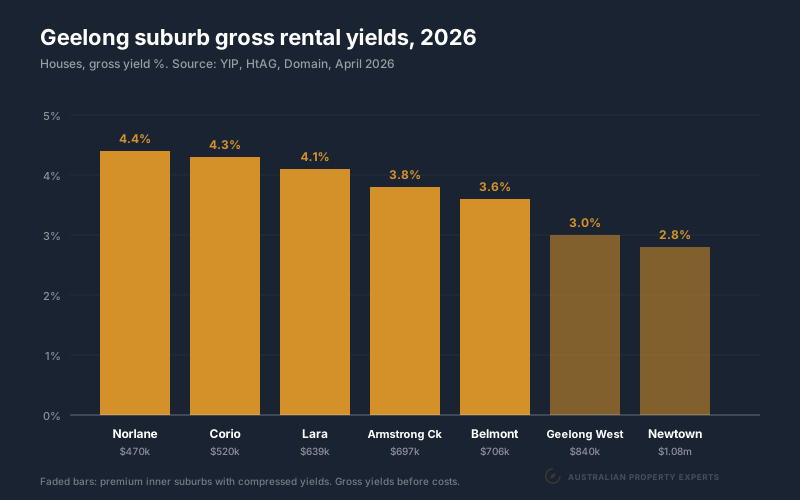
Median house price: ~$470,000 Gross rental yield (houses): ~4.4% Median weekly rent: ~$390 Vacancy: tight, sub-1.5%
Norlane is the yield play. At $470,000 you’re buying an established three-bedroom house on a decent block for less than a unit in inner Melbourne. The 4.4% gross yield is one of the highest house yields inside a capital city satellite market in the country right now.
Employment leans on the Geelong North industrial corridor, the Ford legacy supply chain transitioning into advanced manufacturing, and the NDIA headquarters 10 minutes south. The suburb’s reputation has lagged its actual investment fundamentals for years, which is why the numbers still work. Older weatherboards on 600 to 700 square metre blocks give you cosmetic reno potential and granny flat upside down the track.
Corio
Median house price: ~$520,000 Gross rental yield (houses): ~4.3% Median weekly rent: ~$430 12-month growth: ~7%
Corio sits right next to Norlane and does a similar job for a slightly higher price. You get a marginally better address, similar land sizes, and a yield still above 4%. Vacancy is around 1.3% on recent SQM data, which tells you rental demand is doing the heavy lifting on holding costs.
The infrastructure case here is the same corridor story: Avalon Airport expansion, the industrial precinct along the Princes Highway, and commuter access to both Geelong CBD and the NDIA hub. Corio is where a lot of Geelong’s essential worker tenants live, which means steady rental demand through any cycle.
Lara
Median house price: ~$639,000 Gross rental yield (houses): ~4.1% Median weekly rent: ~$505
Lara sits between Geelong and Werribee with its own train station on the Regional Rail Link, a direct run into Southern Cross Station. That connectivity is the key, and it does not depend on any future upgrade.
At $639,000 with a 4.1% yield, the numbers are tighter than Norlane or Corio but the suburb has more mature infrastructure: schools, retail, a town centre that feels like its own place rather than a fringe estate. The tenant mix skews to families, which means longer tenancies and less turnover. Stick to the established streets near the station, not the newer estates on the southern edge.
Armstrong Creek
Median house price: ~$697,000 Gross rental yield (houses): ~3.8% Median weekly rent: ~$508 Population growth: one of the fastest in the country
Armstrong Creek is the growth story with the biggest asterisk in the guide. Population went from 4,247 in 2016 to 11,247 in 2021, a 165% jump, and it’s still climbing. The suburb is Victoria’s sixth designated major urban growth area and the pipeline of approvals is huge.
That’s the opportunity and the risk in one sentence. A 3.8% gross yield at $697,000 is fine. But building approvals are running above 5% of the existing stock, which means supply could outpace demand for stretches. If you buy here, buy the established older sections closer to the Surf Coast Highway corridor, not the newest releases. New builds compete directly with the next release, and that’s not a fight an investor wants.
Belmont
Median house price: ~$706,000 Gross rental yield (houses): ~3.6% Median weekly rent: ~$493
Belmont is the balanced pick. It’s a middle-ring suburb with genuine character, close to Waurn Ponds employment (Deakin University, the hospital precinct, and the new health and research investments), and a 10 minute drive from central Geelong.
The yield at 3.6% is below the outer suburbs but the capital growth story is stronger on a longer hold. Weatherboards and post-war brick homes on blocks of 600 to 800 square metres give you reno potential and good land content. The Waurn Ponds corridor is where a lot of Geelong’s professional job growth is happening, which underpins tenant demand at the upper end of the local rental market.
Geelong West and Newtown (premium, with a warning)
Geelong West median: ~$840,000, yield ~3.0% Newtown median: ~$1,076,000, yield ~2.8%
These are the premium inner suburbs. Cafe strips, character homes, walkable streets. They get included on most “best of Geelong” lists on reputation alone. The numbers as of April 2026 are tight.
Newtown posted negative growth over the past 12 months on some datasets. Gross yields are below 3%, which means an investor is carrying most of the holding costs out of pocket even on interest-only terms. There’s a capital growth case for a long hold, but there’s no cash flow case. If you have the income to absorb the negative gearing and a 10+ year horizon, these suburbs can work. If you need the numbers to stack closer to neutral, they don’t.
The Victorian backdrop
Three things shape the Geelong case in 2026. First, Victorian land tax changes in 2024 drove roughly 24,000 rental properties out of the market statewide. That tightened vacancy and kept rents rising across regional Victoria, Geelong included. It also means investors should run their land tax numbers upfront, not at year end.
Second, rail. Geelong Fast Rail lost its federal funding in the November 2023 infrastructure review and is not proceeding in its original form. What Geelong has is the existing V/Line service to Southern Cross in around an hour and the Waurn Ponds duplication works. That is enough to keep the commuter market real, but a faster run is not something to price in.
Third, the NDIA national headquarters, Avalon Airport, and the Deakin Waurn Ponds health and research precinct give Geelong an employment base that doesn’t exist in most regional cities. Geelong isn’t a one-industry town anymore. That diversity is what keeps vacancy tight and rental demand durable through cycles.
For more on the Victorian market context, see Melbourne property market 2026 and the land tax by state guide.
What to avoid
Three traps worth calling out.
New builds in the newest Armstrong Creek releases. You’re competing with the developer’s next release and the one after that. The depreciation benefits get quoted as the fix, but they don’t outweigh weak capital growth in an oversupplied pocket.
Premium inner suburb house-and-hope. Newtown and Geelong West can work, but not as cash flow properties. If the pitch is “buy for growth, yield will catch up,” check the maths first. A 2.8% yield doesn’t catch up to holding costs quickly.
Stretching your borrowing capacity on Belmont or Waurn Ponds when Corio or Norlane sit in your budget with better yields. The affordable end of Geelong has outperformed the premium end for three years running, and the gap isn’t closing. This is the same argument we make in affordable vs blue chip.
Where Geelong fits in a portfolio
Geelong works as a second or third property for an investor who already has exposure to QLD, WA, or SA and wants to balance a portfolio into the earlier part of the Victorian cycle. If you are still working out the shape of that portfolio, start with our guide to property investment in Australia. It also works as a first property for a Victorian investor who wants to buy close enough to check on the property without buying emotionally in their own suburb.
Houses over units in almost every case. Established over new. Land content matters more than finish. The same rules apply here as anywhere else we buy. Our case studies show those rules applied to real purchases. For how growth and yield combine in portfolio strategy, capital growth vs rental yield breaks it down.
Which Geelong suburbs to buy in 2026
The best suburbs to invest in Geelong 2026 aren’t the ones with the best coffee or the prettiest Victorian terraces. They’re the ones where the median, yield, vacancy, and pipeline line up. For most investors that means Norlane, Corio and Lara for yield-first plays, Belmont for balanced, and Armstrong Creek only with a careful read on where in the suburb you’re buying.
This is general information only and not financial advice. Speak to a qualified professional before making investment decisions.
See how we find growth properties in markets like Geelong.
If you want a data-led read on which Geelong suburb fits your portfolio strategy, book a free discovery call.