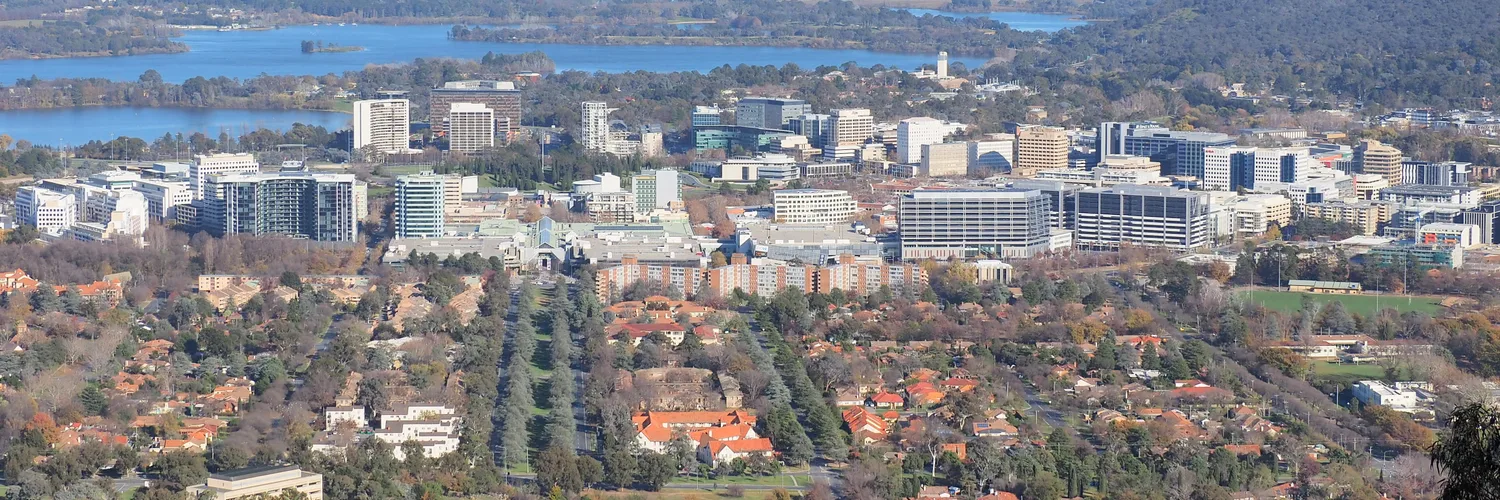
Canberra doesn’t usually top the list when investors talk about the best suburbs to invest in for 2026. It’s the quiet capital. No mining boom, no AUKUS headline, no Sydney-style FOMO. But the ACT has the most stable employment base in the country, Light Rail Stage 2A is under construction, and specific suburbs are still delivering 4-5% gross yields at entry points well below Sydney or Brisbane.
Canberra’s median dwelling value is $885,254, on Cotality’s Home Value Index released 3 August 2026, covering July. It is up 2.9% over the year but down 1.3% over the quarter and 0.6% in July, so the market has drifted slightly lower since March. The median masks a wide spread: inner-north houses are over $1.1 million, while outer Belconnen and Tuggeranong suburbs still trade under $700,000. Vacancy is tight at around 1.4% (SQM Research), and weekly rents have been grinding higher.
Here are five suburbs selected on median price, gross yield, vacancy, employment access, and infrastructure pipeline.
Belconnen
Median house price: ~$645,000 Median weekly rent: ~$590 Gross rental yield (houses): ~4.7%
Belconnen is the most affordable house entry point in the Canberra metro area on this list. The Belconnen Town Centre is the second-largest commercial hub in the ACT outside the CBD, anchored by Westfield Belconnen, the University of Canberra, the Australian Institute of Sport, and a dense cluster of federal government offices at Cameron Avenue and Benjamin Way.
At $645,000 with $590 per week rent, the cash flow profile is the strongest on this list. An interest-only loan on that purchase price leaves the numbers closer to neutral than anywhere else in Canberra.
The tenant pool is deep: university students, public servants, healthcare workers from Calvary Public Hospital, and staff from the tech and defence firms in the Fern Hill Technology Park. That employment diversity is rare in Canberra, where many suburbs are effectively single-driver markets tied to the Parliamentary Triangle.
Target the established residential streets around Belconnen proper, not the high-density unit towers near the town centre. Older brick houses on 700-800sqm blocks with reno potential are the profile. Affordable markets have consistently outperformed blue chip across every capital, and Belconnen is the clearest version of that argument in the ACT.
Ngunnawal
Median house price: ~$751,000 Median weekly rent: ~$610 Gross rental yield (houses): ~4.2% Sales volume (12 months): 153 houses
Ngunnawal sits in the Gungahlin district, the ACT’s growth corridor and the northern terminus of Light Rail Stage 1. At $751,000 with $610 per week rent, Ngunnawal delivers a 4.2% gross yield at an entry point over $200,000 below the Canberra median house price.
The structural driver here is Gungahlin itself. It’s the ACT’s youngest district, built largely since the late 1990s, with a growing commercial centre, a direct light rail line to the CBD, and ongoing infrastructure investment. Ngunnawal is one of the more established Gungahlin suburbs with older 1990s-2000s housing stock on decent blocks, rather than the high-density townhouse and unit developments clustered closer to the Gungahlin town centre.
Sales volumes are healthy at 153 houses in the past year, which means stock turns over regularly and investors have options to be selective on block size, street, and reno potential.
Ngunnawal works for investors who want Gungahlin exposure without paying the premium for suburbs that sit directly on the light rail alignment.
Kambah
Median house price: ~$869,000 Median weekly rent: ~$660 Gross rental yield (houses): ~4.0%
Kambah is the largest suburb in Tuggeranong and one of the largest by population in the ACT. The Tuggeranong Town Centre sits a short drive south, Woden is 15 minutes north, and the proposed Light Rail Stage 2B alignment will eventually run through Woden on its way further south.
At $869,000 with $660 per week rent and a 4.0% gross yield, Kambah is more of a balanced play than a pure cash flow suburb. The housing stock skews to 1970s-1980s brick houses on 700-900sqm blocks, which is exactly the profile we look for across a portfolio: structurally sound, visually dated, and ready for a cosmetic renovation that can force $40,000-$60,000 in equity without touching the floorplan.
Kambah’s size means sales volumes are strong and stock variety is unusually deep for Canberra. Streets vary significantly in quality, so street selection matters more here than in smaller suburbs. For how the equity extraction process compounds across a portfolio, see our portfolio building guide.
Wanniassa
Median house price: ~$900,000 Median weekly rent: ~$660 Gross rental yield (houses): ~3.8% 12-month growth: ~5%
Wanniassa sits next to Kambah in the Tuggeranong valley, with a similar housing stock profile and a similar tenant demographic. The suburb has posted around 5% capital growth over the past 12 months while most of the ACT has been flat, which makes it one of the better recent performers in Canberra’s outer south.
At $900,000 with $660 per week rent, the 3.8% gross yield is lower than Belconnen or Ngunnawal, but the numbers work when paired with the growth trajectory. Sales volumes of 110 houses in the past year give investors stock variety, and days on market around 42 suggests a balanced rather than overheated market.
Wanniassa Hills Primary, Erindale College, and the Erindale Shopping Centre anchor the local amenity. Tenant quality tends to be strong, with longer average tenancies typical of the family demographic the suburb attracts.
Target the older established sections on larger blocks rather than the newer infill streets. The growth and reno optionality sit with the 1970s-1980s stock, not the 2000s project homes.
Dickson (units)
Median unit price: ~$580,000 Median weekly rent: ~$615 Gross rental yield (units): ~5.5%
Dickson is the only unit-led entry on this list, and there’s a specific reason. The inner-north unit market in Canberra has been punished over the past few years as supply caught up with demand. Dickson unit values are down around 7% over 12 months, which has pushed yields higher and reset entry points back to levels not seen since 2020.
At $580,000 with $615 per week rent, the gross yield sits around 5.5%. That’s the strongest yield on this list and among the strongest unit yields in any capital city right now.
The investment case is the light rail. Dickson sits directly on the Light Rail Stage 1 alignment, 10 minutes to the CBD, with the Dickson Shops precinct (one of Canberra’s best food and retail strips) at the doorstep. Tenant demand is dominated by young public servants, hospital workers from the nearby Canberra Hospital network, and ANU students.
This is not a strategy we use often. Units in high-supply corridors usually fail the test on land value and growth. But the current pricing reset in Dickson is unusual, the yield is real, and the light rail connectivity is structural. For investors who already hold houses and want a cash flow-focused complement, this is worth analysing.
One caveat: stick to older lowrise blocks, not new high-density towers with heavy body corporate fees. Body corporate costs can erode yields on newer Dickson stock by $80-$150 per week.
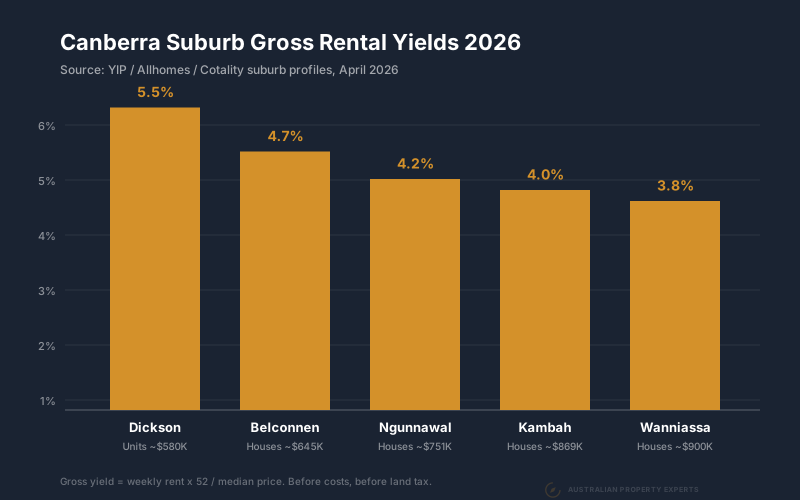
The quick comparison
| Suburb | Median price | Rent | Yield | Type |
|---|---|---|---|---|
| Belconnen | ~$645,000 | ~$590 | ~4.7% | House |
| Ngunnawal | ~$751,000 | ~$610 | ~4.2% | House |
| Kambah | ~$869,000 | ~$660 | ~4.0% | House |
| Wanniassa | ~$900,000 | ~$660 | ~3.8% | House |
| Dickson | ~$580,000 | ~$615 | ~5.5% | Unit |
What drives the Canberra market
Federal government employment is the backbone. Roughly 1 in 3 ACT workers is employed by the Commonwealth directly or indirectly, which gives Canberra the most recession-resistant employment base in the country. Wages are high, tenant quality is strong, and vacancy has rarely drifted above 2% over the past decade.
Light Rail Stage 2A is under construction, extending the existing line from Alinga Street to Commonwealth Park with three new stops. First services are targeted for 2028. Stage 2B, the Woden extension, remains in planning and will be the bigger uplift when it progresses, linking the southern employment hub directly to the CBD.
The new Northside Hospital announced for Bruce, alongside expansions at Canberra Hospital and the University of Canberra Hospital, locks in healthcare employment across both sides of the lake for the next decade.
What to be careful about
Canberra is not Adelaide or Perth. The numbers are more finely balanced, and a few structural risks need factoring into any ACT purchase.
First, the unit supply pipeline. The Gungahlin and inner-north corridors have absorbed tens of thousands of new units over the past decade, and the pipeline is still active. Outside Dickson’s current yield reset, we would avoid most Canberra unit stock. Houses are the default play.
Second, ACT land tax is the highest in the country as a percentage of property value on investor-held property, charged quarterly based on unimproved value. Run the numbers including land tax before committing. Our state-by-state land tax comparison breaks down how the ACT compares to other states.
Third, the federal employment concentration is a strength and a risk. Any significant APS restructure or downsizing would hit Canberra harder than any other capital. Diversify across states rather than concentrating a whole portfolio in the ACT.
Where the numbers work
Canberra isn’t the highest-growth capital heading into 2026. It won’t deliver the headline returns of Perth, Adelaide, or Brisbane over the past cycle. But the stability is genuine, the yields in specific suburbs are competitive, and for investors building a diversified national portfolio, one well-selected ACT property adds real balance.
Belconnen and Ngunnawal are the cleanest entry points. Kambah and Wanniassa are the growth-leaning plays in the south. Dickson units are a tactical cash flow position while the current pricing reset holds. If you’re buying into the ACT from interstate, having a Canberra buyers agent who knows which streets within each suburb deliver is where the difference gets made. Our case studies show what that looks like on real deals.
This is general information only and not financial advice. Market data reflects conditions at time of writing (April 2026) and may have changed. Speak to a qualified professional before making investment decisions.
See how we source high-yield properties for investors.
If you want to discuss which Canberra suburbs fit your budget and strategy, book a free discovery call.