Buyers Agent Melbourne
Melbourne is the one mainland capital that has not repriced. Its $786,718 median is the lowest of the five. The discount comes with a looser rental market, running 1.11% vacancy at Frankston up to 4.64% at Melton South. Choosing the corridor is choosing how much of that you take on.
Investment Property Specialists
Postcode 3199 at Frankston read 1.11% vacancy in August 2026, while Craigieburn's 3064 read 3.67% and Melton South's 3338 read 4.64%. You do not buy a city-wide average. You buy one postcode. The eight we read run right across that range. Adelaide's northern postcodes run 0.52% to 0.92% and Perth sits at 0.61%. Even Melbourne's tightest corridor is looser than both. That is what the discount costs. Melbourne's median is down 3.9% over five years while every other mainland capital rose.
Australian Property Experts buys investment property and nothing else, and is paid by no developer and no selling agent. Peter Ly founded the business, holds 17+ properties in his own name, and has completed 300+ client purchases around Australia. The city-level numbers behind this page sit in our Melbourne property market update for 2026.

Melbourne is the only mainland capital where the last five years took values backwards. Its median dwelling value was $786,718 at 31 August 2026. You are buying at a discount to the rest of the country. What you take on in exchange is a rental market looser than Brisbane, Adelaide or Perth. The corridor sets how much of it.
Five parts of a Melbourne purchase that turn on corridor-level work:
Postcode 3199 at Frankston read 1.11% in August 2026, the tightest of the eight we read. It is still looser than Perth's 0.61% city-wide. Melton South's 3338 read 4.64%, Craigieburn's 3064 3.67% and the CBD 3.65%, the three loosest of the eight. Dandenong's 3175 sat at 1.31%, Pakenham's 3810 at 1.41%, Werribee's 3030 at 1.74% and Melton's 3337 at 2.68%. Picking the corridor is picking where in that range you sit.
The twelve house markets we measured run from 3.63% at Frankston to 4.12% at Pakenham. The whole band is 0.49 of a percentage point wide. Medians across those same twelve run $565,000 to $860,000. Neither figure spreads far across the city. So neither one is what the corridor decision turns on.
Melbourne returns 4.0% gross at city level, the best yield of the major capitals. That reading is an average across houses and units. The twelve house markets we measured sit between 3.63% and 4.12%.
Many of the investors who come to us for Melbourne are buying from another state. Few of them want to spend Saturdays driving between Melton and Pakenham. We attend the inspections, run the due diligence, negotiate and coordinate settlement. You see every figure we see, and your Saturdays stay yours.
No developer, project marketer or selling agent puts a dollar our way, so your fee is the only income on the purchase. That matters in a state where dwelling approvals over the twelve months to July 2026 ran 11% below the ten-year average. When less is being built, project marketers compete harder for the buyers who are around. An agent paid by the seller has a reason to steer you into that stock. We are not paid by them, so we do not.
We measured twelve house markets across the western, northern and south-eastern corridors. The six carded below are the ones we would put to a client first. Every yield here is our own arithmetic. We take the weekly rent to 52 weeks and set it over the median, so each card's three figures agree. Where a published yield looks stronger than ours, the usual reason is a median and a rent read months apart. Our list of the best suburbs to invest in Melbourne goes wider. Our comparison of capital growth and rental yield covers the trade.
The lowest median of the twelve markets measured. It also has the strongest twelve months and the strongest five-year average of those twelve. Its postcode is the fifth tightest of the eight here.
The second strongest five-year average of the twelve markets measured, behind Melton. It sits next door in postcode 3338, the loosest of the eight here. It rents for $20 a week more.
1,056 sales over the year, the most of the twelve markets measured. Its 3.70% is the second weakest of those twelve yields.
The best computed yield of the twelve markets measured. It sits behind the third tightest of the eight postcodes here, and it is the fastest to clear, at 14 days.
Second for sales of the twelve markets measured. It stands behind the second loosest of the eight postcode readings. It is also the slowest of the six cards to sell.
The highest median of the twelve measured and the weakest computed yield of those twelve. Its postcode is the tightest of the eight here. Its twelve months rank second among the cards.
August 2026 against the reading four months earlier, in April. Four of the eight eased and four went the other way.
Computed the same way. None breaks out of the yield range the carded six already sit in.
The strongest unit reading of the twelve measured.
Units out-yield houses in all twelve suburbs measured. We would still open most briefs on houses. The extra return goes straight back out in body corporate fees. It also comes with less land and a tenant pool that moves more often.
Anything priced as though these corridors are about to run at double digits. Melbourne values fell 4.7% over the year to August. Off-the-plan stock, anything through a project marketer, and any corridor chosen on yield alone.
We buy established stock only, tested on tenant demand that lasts and a price with room left in it.
How It Works
Our buyers agent Melbourne process runs six steps, in the same order on a $565,000 Melton house as on an $860,000 Frankston one.
We go through your goals, what the bank will lend, your timeline and the risk you are comfortable carrying. If Melbourne is not right for what you want, that is the call where we say it.
After you engage us we set the structure, the budget and the objectives. Then we read them against the corridors, postcode by postcode. Melton at $565,000 behind 2.68% vacancy and Pakenham at $720,000 behind 1.41% carry different risk.
We work the public listings alongside our off-market network across Melbourne and regional Victoria. A typical brief produces a shortlist of three to five candidates in two to four weeks.
Everything on the shortlist gets full due diligence, which means building and pest inspections, comparable sales analysis, and rental appraisals. The rental appraisal then gets read next to the vacancy in that postcode. A corridor at 1.11% will hold a rent that a corridor at 3.67% will not.
We negotiate off comparable sales rather than the quoted range. With Melbourne values down 4.7% over the year to August, we will not pay a price that has assumed a quick rebound.
From acceptance we hold your conveyancer, mortgage broker and property manager to one set of dates. What you end up with is keys and a tenant under lease.
Typical timeline: 6 to 12 weeks from engagement through to settlement. Finance approval and the wait for the right property take up most of that.
Sydney's median dwelling value is $1,222,718 and Brisbane's is $1,080,142 against Melbourne's $786,718. That is why a lot of first calls land here.
Melton's $565,000 is the lowest entry we card. Behind it sits a 2.68% postcode, and that is the trade.
You earn enough to buy but the week is already full. Searching, inspecting and negotiating sit on our side. The weekends come back to you.
Buying Victoria from another state means somebody else standing in the property for you. Our guide to buying interstate covers it.
A Self-Managed Super Fund or family trust purchase needs the structure settled before contracts move. Victoria has its own bare trust requirements, timed against the contract dates. Since 10 August 2026 an SMSF can no longer borrow to buy residential property, so a fund purchase now has to come from the balance you already hold.
A 1.11% postcode and a 3.67% one look identical in a listing photo. You will see what we ruled out and why, not only what we put forward.
Your Buyers Agent
Founder and Principal Buyers Agent
Peter spent the best part of a decade in banking and finance before founding Australian Property Experts. He still works a number back to its source before he uses it.
Peter does not put a property to a client that he would not hold himself. His own portfolio spans houses, townhouses and units in several states, held through a full cycle. His guidance comes from that portfolio.
Peter's view is that Melbourne is the one mainland capital the last five years did not reprice, which is what puts it on the shortlist. He treats the discount as real and the reason for it as real too. Pakenham at $720,000 behind 1.41% and Craigieburn at $723,000 behind 3.67% cost almost the same. They are not the same purchase.
His caution is the rental market and the pace of what follows. Four of the eight postcodes rose over four months. Pakenham went from 0.82% to 1.41%, the CBD from 2.89% to 3.65%, Craigieburn from 3.52% to 3.67% and Frankston from 1.05% to 1.11%. In proportional terms, Pakenham's rise is the sharpest of the four.
Five-year averages in these corridors run 2.87% to 6.11% a year. Melbourne values fell 1.1% in August alone. The suburb growth above runs only to 30 June 2026, and values nationally have been going backwards since March.
Based in Sydney, buying Australia-wide. We work with Melbourne investors remotely, with inspections attended on the ground.

Melbourne's median dwelling value was $786,718 at 31 August 2026. A 2% fee on it is $15,734 plus GST. Melbourne buyers agents usually price at 1.2% to 2.75% plus GST. On that median, the band runs from $9,441 at the bottom to $21,635 at the top. That is more than double from one end of the band to the other, for the same job on the same property.
We charge one fixed fee instead. It is agreed before we start and it follows the scope of the work. The price you pay for the property does not move it. None of it is a percentage. No developer, project marketer or selling agent pays us a commission. The fee covers the strategy session, the search across on-market and off-market stock, inspections attended for you, full due diligence coordination, negotiation, and settlement coordination.
A percentage moves with the purchase price, so the person negotiating for you is paid more the more you pay. A fixed number cannot.
Outside the fee sit the third-party costs, mainly building and pest, your conveyancer and your mortgage broker. Our buyers agent fees guide runs the same maths for every capital.
Three questions worth putting to any Melbourne buyers agent before you sign. Is the fee a percentage or a fixed number? What happens to it if the price moves up? Does anyone other than you pay them on this deal?
Two more checks are worth making on any buyers agent Melbourne investors shortlist. Confirm state licensing. A buyers agent has to be licensed in each state where they buy, and Victoria is its own jurisdiction. Confirm professional indemnity cover as well. REBAA membership is a reasonable baseline on both counts.
Strategy session, on-market and off-market search, due diligence, negotiation and settlement coordination for one residential purchase in Melbourne or regional Victoria.
SMSF, family trusts, company structures, or a property needing subdivision analysis. The fee accounts for the extra due diligence.
Two to five or more purchases attracts volume pricing, ordered so the borrowing from one purchase supports the next.
A flat fee also means the number does not move if the right property is Frankston at $860,000 rather than Melton at $565,000. Our case studies show what clients have bought.
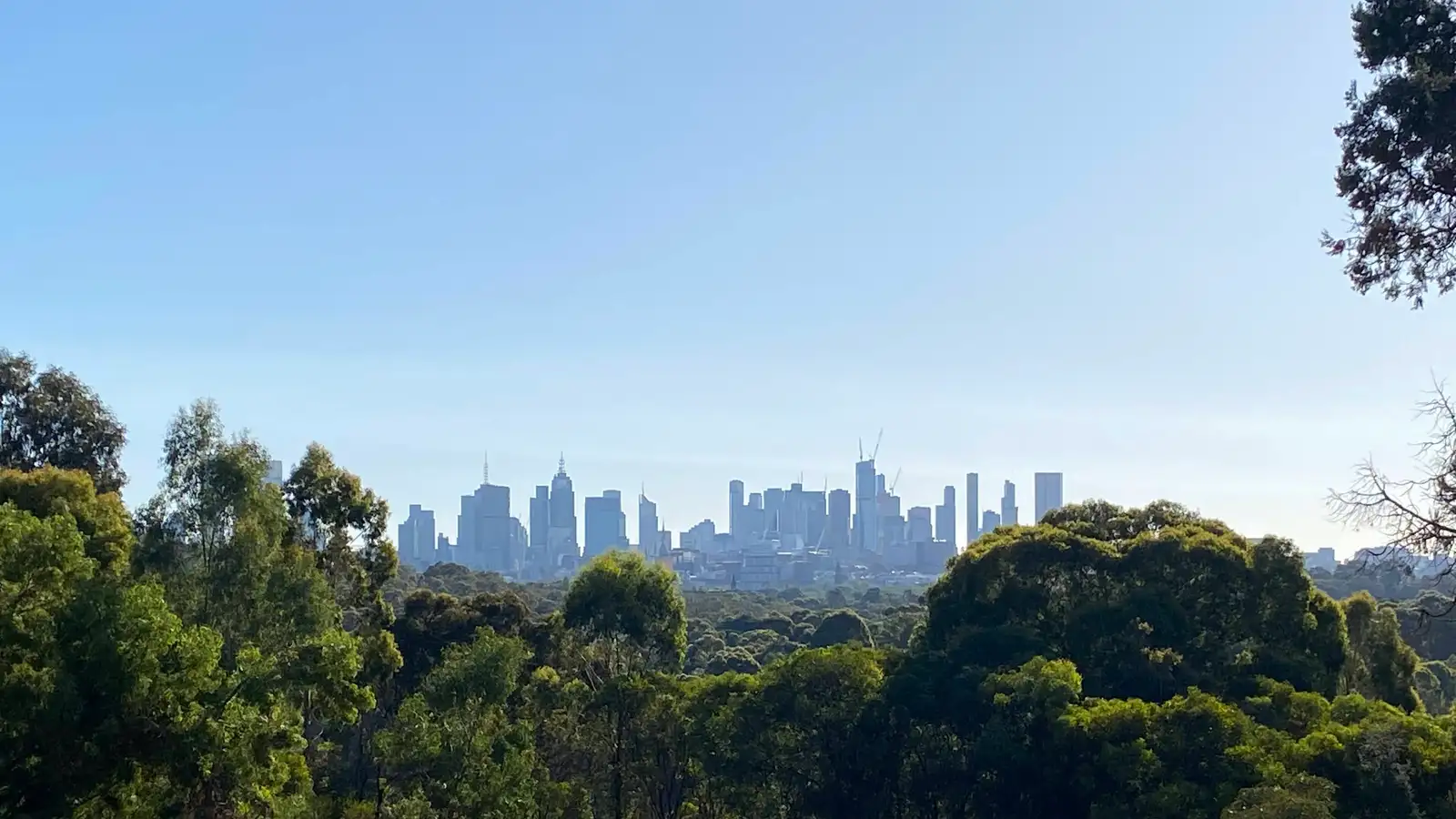
Investors shortlisting Melbourne usually have Brisbane, Perth or Adelaide on the same page.
Every suburb yield here is computed by us. Each one can be checked against the two figures beside it. The 4.0% gross figure is a Melbourne-wide reading across houses and units. Only Pakenham of the twelve house markets computes above it.
Four Victorian client purchases from the case studies we publish.
Not sure Melbourne is where this purchase belongs? We are an investment property buyers agent working in every state. The shortlist comes out of the vacancy, the rent and the price. Inside Victoria we also buy in Geelong and Frankston.
Worth reading before a call.
Get Started
A 15 minute call to understand your goals, your budget, and whether Melbourne is the right market for what you're trying to build.
A buyers agent works under a licence to find a property, assess it and negotiate it for the person buying. The agent listing the house is engaged by the seller and paid to push the price up. We are engaged by you. Every part of the job runs the other way.
Count on 6 to 12 weeks from engagement to settlement. Two to four of those weeks usually go on the search. Finance approval plus the settlement period take up the rest. A property already sitting in our off-market network pulls the date forward. An SMSF or trust purchase pushes it back.
No. Established investment properties are the only thing we buy. Each one is judged on whether tenants want it, how far the rent goes against the holding cost, and how much growth is left in the price. Whether you would enjoy living in it never enters the assessment.
Melbourne's median dwelling value was $786,718 at 31 August 2026, so a 2% fee on it is $15,734 plus GST. The 1.2% to 2.75% band Melbourne agents quote runs from $9,441 to $21,635 plus GST on that same median. We charge none of it as a percentage. Our fee is one fixed number, agreed before we start and set by the scope of the work. What you pay for the property does not change it. Developers, project marketers and selling agents pay us nothing. The fee buys the strategy session, the search across on-market and off-market stock, inspections attended for you, full due diligence coordination, negotiation and settlement coordination. Outside the fee sit the third-party costs, mainly building and pest, your conveyancer and your mortgage broker.
There is no difference in the work. Advocate is the word Victoria uses and agent is the word used elsewhere, so the two describe the same licensed job. Quotes from a Melbourne buyers advocate and a Melbourne buyers agent compare directly. Anyone pricing on a percentage will quote 1.2% to 2.75% plus GST, which is $9,441 to $21,635 on Melbourne's $786,718 median. Either way, what matters is the basis under the number rather than the word on the letterhead.
Yield will not settle it. The twelve house markets we measured return between 3.63% and 4.12% computed, on medians from $565,000 to $860,000, so vacancy is what separates them. Pakenham at $720,000 pays 4.12% and sits in postcode 3810, which read 1.41% in August 2026. Craigieburn at $723,000 pays 3.96% at almost the same price. Its postcode 3064 read 3.67%. Melton is the lowest entry at $565,000, behind a 2.68% postcode. Frankston is the dearest of the six we card at $860,000 and pays the weakest yield at 3.63%. It sits behind a 3199 reading of 1.11%, the tightest of the eight we read. Growth figures stop at 30 June 2026.
Data sources: medians, twelve-month growth, five-year averages, sales counts and days on market come from CoreLogic to 30 June 2026, via Your Investment Property. Those figures were pulled on 26 September 2026. Rents are weekly figures to 31 August 2026. We calculate each suburb yield ourselves, dividing weekly rent times 52 by the median price, and we do not repeat published yields. Postcode vacancy is SQM Research for August 2026 across eight postcodes, each set against its April 2026 reading. Perth's city-wide vacancy and Adelaide's northern postcodes (5108, 5112 and 5113) are SQM Research for August 2026 too, and the Adelaide five-year averages are CoreLogic via Your Investment Property. Melbourne's median dwelling value, its gross yield and its five-year change, plus the other capital medians, are Cotality Home Value Index readings at 31 August 2026. Victorian dwelling approvals are ABS Building Approvals (original series) for the twelve months to July 2026, set against the average of the ten twelve-month periods before it.