Commercial Property Buyers Agent for Investors

We're a commercial buyers agent for investors, family trusts and SMSFs. We buy industrial, retail, medical and office property, and we judge each one on its lease and the tenant paying the rent.

Book a Free Discovery Call

Dollar for dollar, commercial property usually earns more rent than a home. At CBRE's September portfolio auction, the lots that sold averaged a 5.35% yield. They included a KFC, a Goodstart childcare centre and a BP service station. Australian homes had a gross rental yield of 3.79% at 31 August on Cotality's figures. The gap is wider than it looks, because the commercial figure is usually what's left after the tenant pays most of the running costs. The home figure is before rates, insurance and repairs come out.

The catch is that the price rests mostly on the lease. The tenant's time left, the way the rent rises and who pays the outgoings all move the yield a buyer will accept. On a property earning $100,000 a year in net rent, going from a 6.0% yield to 6.5% takes $128,205 off the price.

We're Australian Property Experts, an investment-only buyers agency. Our founder Peter Ly owns 17+ investment properties and has bought 300+ residential properties for clients across every state. As a commercial buyers agent we still find the property, check it and negotiate the price, but far more of the checking happens in the lease.

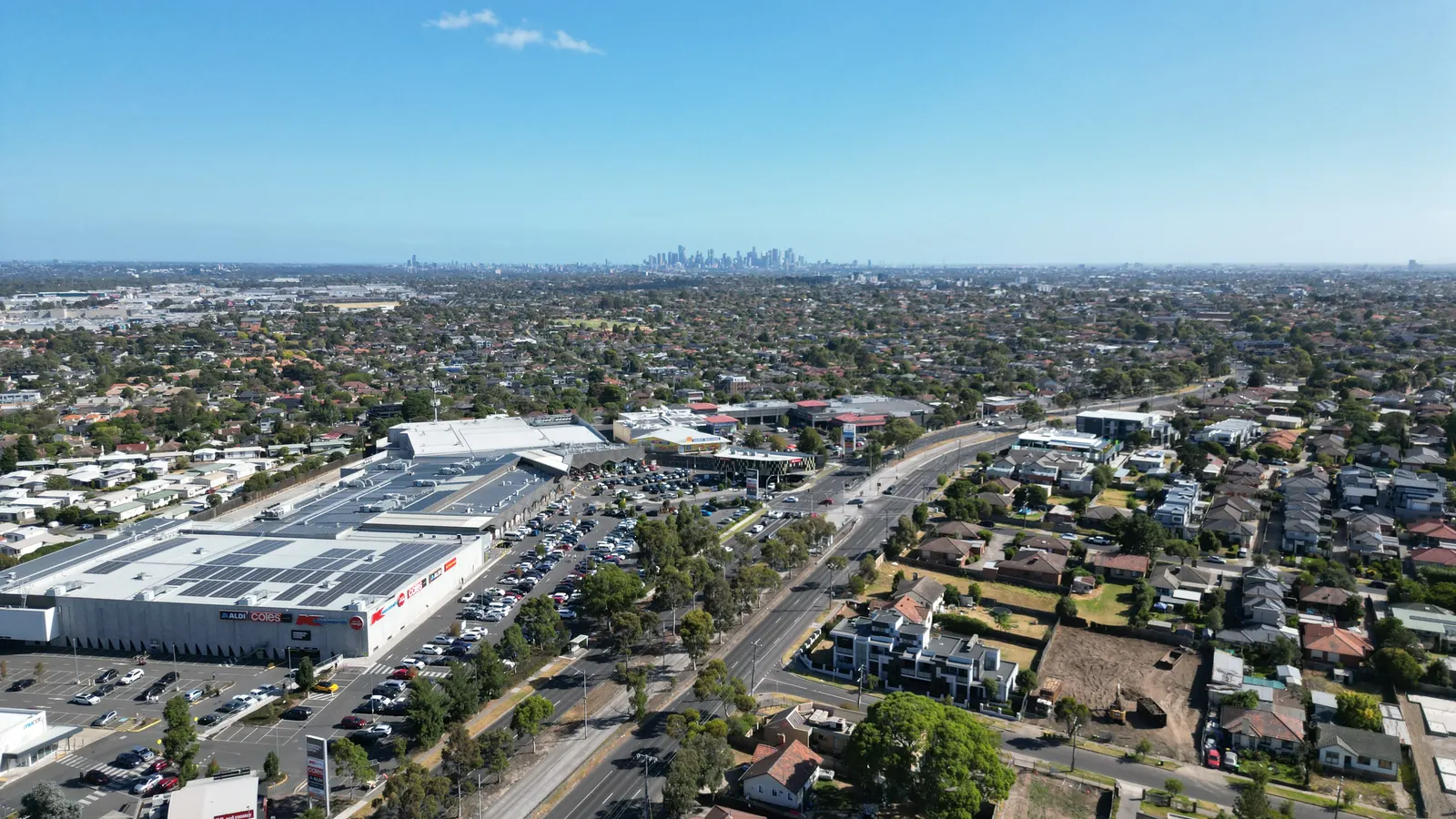
Aerial view of Summerhill Shopping Centre in Reservoir, Melbourne, with the city skyline on the horizon under a clear blue sky
Summerhill Shopping Centre in Reservoir, in Melbourne's north, with the CBD on the horizon. Photo: BobTanGo, CC BY 4.0, cropped, via Wikimedia Commons

What a Commercial Buyers Agent Does

A commercial buyers agent finds commercial property for the buyer and negotiates the price. Along the way they check the lease, the tenant and the building, then see the purchase through to settlement. Buying commercial property with us takes six steps.

01

Free Discovery Call (15 mins)

You'll finish the call knowing whether commercial fits your portfolio yet. We'll cover roughly what your deposit and borrowing could buy and which kind of property suits the income you're after.

02

Strategy Session & Brief

Once you engage us, we set the brief. It covers the property type, the income you need, the shortest lease you'd accept, the location and who will own it. Your broker confirms the lending before the search starts, because some commercial lenders assess the loan on the rent alone.

03

Property Search (On & Off-Market)

Some commercial property sells off-market, to an agency's own list of investors, before it's ever advertised on realcommercial.com.au or commercialrealestate.com.au. We put your brief in front of the agents who sell the kind of property you want. We watch the portals too. You see the ones worth a closer look, with our reasons for passing on the rest.

04

Lease, Tenant & Building Checks

We compare the rent with what similar space leases for today. A tenant paying well over market has every reason to push for a cut at renewal. For a single tenant we look at how long the business has traded and who guarantees the lease. Its spend on the fit-out counts too. A clinic that has spent heavily on its rooms has a strong reason to renew. Zoning, title, strata records, fire safety and flood mapping get checked with your solicitor and a building consultant.

05

Negotiation & Offer

Commercial prices are negotiated as yields. We rebuild the net income from the lease and the actual outgoings. A vendor's figure can leave out costs the lease doesn't let the owner recover. Then we check the asking yield against recent sales of similar properties and make our offer at the yield those sales support.

06

Contract to Settlement

We work through the contract with your solicitor, including how GST is treated. Finance, the tenant notices and the settlement figures stay on track until the property is yours.

Commercial Property Types We Buy

We buy four kinds of commercial property. The checks change with each one, because the tenants, the leases and the vacancy rates are so different.

Modern industrial unit with a roller door and office frontage in Eagle Farm, Brisbane, under a clear blue sky

Industrial & Warehouse

Warehouses, factory units and strata industrial. JLL counted 4.8% of industrial space vacant in the June quarter, around a third of the CBD office rate. We look at truck access and clearance and whether the zoning suits the tenant's use. Then there's the site's history, since an old use can leave contamination behind.

Photo: Chris Olszewski, CC BY-SA 4.0, cropped
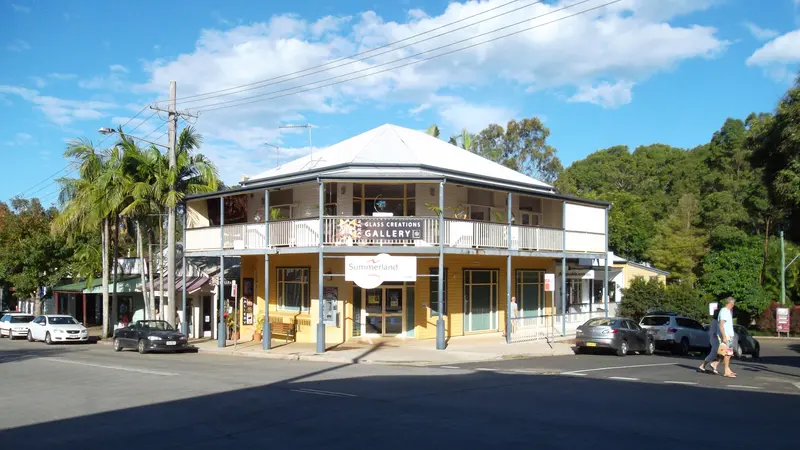
Two-storey corner shopfront building with a verandah on Byron Street, Bangalow, New South Wales

Retail & Shopfronts

Strip shops and small neighbourhood centres. On a single shop we look at how long the business has traded and what else is on the strip. In a small centre it's any anchor tenant and how the other shops feed off it. Each state's retail leasing laws also limit which outgoings you can pass on.

Photo: Gatoclass, CC BY-SA 3.0, cropped
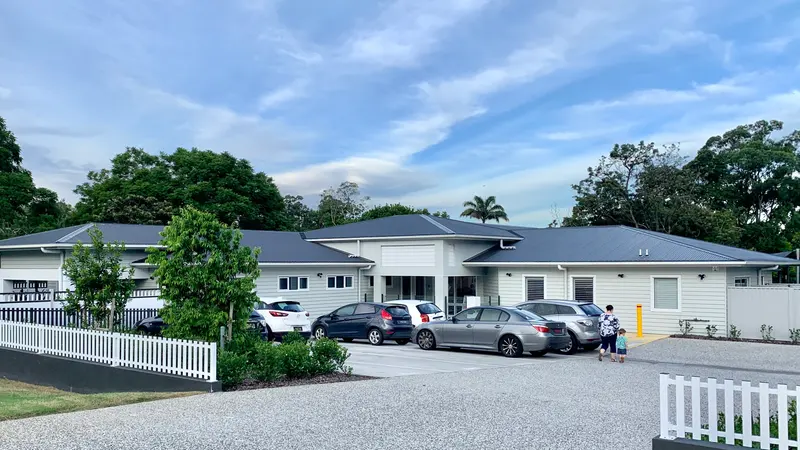
Single-storey childcare centre with a car park and white picket fence in Corinda, Brisbane

Medical & Childcare

GP clinics, dental practices, allied health and childcare centres. They tend to spend big on fit-outs. CBRE's March 2026 report puts childcare yields generally between 4% and 6%. We check the operator's track record and the approvals the business depends on. We also weigh how easily a purpose-built building would re-let if the operator left.

Photo: Kgbo, CC BY-SA 4.0, cropped
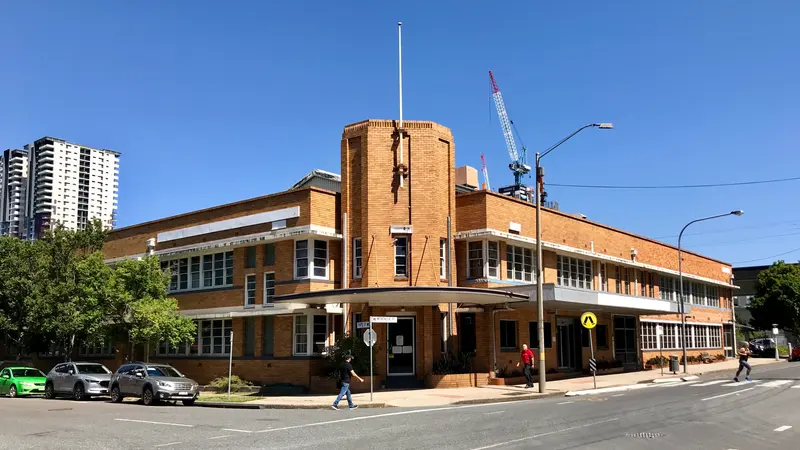
Two-storey brick commercial building at 62 Montague Road, South Brisbane, under a clear blue sky

Offices

Small and strata offices and suburban low-rise buildings. The Property Council counted 14.9% vacancy in the CBDs in July and 18.9% in the non-CBD markets it tracks. We price in the incentive a new tenant would expect and check how easily the space would suit a different business.

Photo: Kgbo, CC BY-SA 4.0, cropped
Bar chart of vacancy: industrial 4.8% across the five mainland capitals (JLL, June quarter 2026), CBD office 14.9% and non-CBD office 18.9% (Property Council of Australia, July 2026).
Vacancy by sector. Sources: JLL (industrial, five mainland capitals), Property Council of Australia (office).

Is Commercial Property a Good Investment?

It can be, if you want income. In our view, commercial comes later in a portfolio. The first few purchases are there to grow and build equity. Established houses in affordable markets do that well. Commercial property investment is the income end, for when rent coming in matters more than the next growth asset. Our portfolio guide sets out that order.

The case for it is the rent. Yields usually sit above residential, and leases often run for years. On a net lease the tenant pays most of the running costs. Many leases lift the rent each year by a fixed percentage or CPI, with nothing to negotiate. That's rent rising every year with fewer calls about leaking taps. It can balance out growth assets that cost you money each year to hold.

Bar chart comparing yields: Australian houses 3.5% and units 4.6% gross at 31 August 2026 (Cotality) against average yields at CBRE's portfolio auctions of 5.64% in June, 5.76% in August and 5.35% in September 2026, and 5.98% for supermarket-anchored neighbourhood centres in FY26 (Stonebridge).
Commercial yields are usually quoted net of outgoings. Residential yields are gross, before costs.

When a tenant leaves, a commercial property can sit empty for months. A new tenant will often want a rent-free period or help with the fit-out. Banks lend less against commercial, so you need a bigger deposit. Each sector runs to its own cycle, and right now office vacancy sits far above industrial.

If you're still building equity, our investment property buyers agent service is the place to start.

Commercial vs Residential Property

The leases, loans and tax rules differ too.

ResidentialCommercial
Yield3.79% gross across all homes (3.5% houses, 4.6% units) at 31 August 20265.35% to 5.76% average at CBRE's portfolio auctions from June to September 2026, usually quoted net
Lease lengthUsually 6 or 12 monthsOften several years, with options to renew. In Victoria a retail lease must run at least 5 years including options, unless the tenant waives it with a Small Business Commission certificate
Running costsThe owner pays rates, insurance, strata and repairsOn a net lease the tenant pays most outgoings, within each state's retail leasing rules
How it is valuedComparable salesNet income divided by a market yield, checked against comparable sales
BorrowingStandard home lendingCommonwealth Bank's lease doc loan goes to 65% LVR and Westpac's to 70% on loans up to $3 million, both for companies and trusts set up to hold the property
Stamp duty and property taxStamp duty and land tax under each state's rulesAlso state by state. In Victoria, the first sale of a commercial property on or after 1 July 2024 generally pays stamp duty and starts a 10-year clock. After that an annual tax of 1% of site value applies, on top of land tax, and later sales may be exempt from duty
GST on the purchaseNone on existing homesApplies to a sale by a GST-registered seller, unless it's sold GST-free as a going concern
Second-hand plant and equipmentNo deduction in most residential rentals bought after 9 May 2017Still deductible when the property is let for commercial purposes
SMSF borrowingA new LRBA can't be used to buy it from 10 August 2026Still allowed for business real property

Sources: Cotality Home Value Index; CBRE auction results reported by The Sector, Commo. and Australian Property Markets News; Retail Leases Act 2003 (Vic); Commonwealth Bank and Westpac product pages, read 29 September 2026; State Revenue Office Victoria; the ATO on GST and property and second-hand depreciating assets.

How Commercial Property Is Valued

A house sells for roughly what similar houses nearby sold for. Commercial property is priced mainly on its income. Start with the net income, which is the rent less any outgoings the owner still pays. Divide it by the yield buyers expect for that kind of property in that area. That yield is also called the capitalisation rate, or cap rate. Recent sales show where it sits now.

On $100,000 of net rent, half a point of yield can move the price by more than $100,000.

Bar chart of the value of a property earning $100,000 a year in net rent at yields from 5.0% to 8.0%: $2.00m at 5.0%, $1.82m at 5.5%, $1.67m at 6.0%, $1.54m at 6.5%, $1.43m at 7.0%, $1.33m at 7.5% and $1.25m at 8.0%. Moving from 6.0% to 6.5% takes $128,205 off the price.
Value of $100,000 a year in net rent at different yields. Our own arithmetic, for illustration.

At a 6.0% yield that rent values the property at $1,666,667. At 6.5% it's $1,538,462, a gap of $128,205. Most of what pushes the yield up or down is written in the lease. Two years left on the lease instead of eight can push the yield up and the price down. So can a tenant with no guarantor, or a clause that hands land tax back to the owner.

What We Check in a Commercial Lease

These eight terms decide how safe the rent is and what the property is worth. Your solicitor checks the lease for legal problems, and we check what each term does to your income.

Lease termWhat it meansWhat we look for
Lease expiry and WALEHow long the lease has left. Where there are several tenants, the weighted average lease expiry (WALE) averages the time left across them, usually weighted by rent.Enough firm term to cover your loan and your plans, and expiries that do not all land in the same year.
Options to renewThe tenant's right to extend, for example a five-year lease with a five-year option.Options belong to the tenant, so we value the property on the firm term and treat any option as upside.
Rent reviewsHow the rent changes during the lease: a fixed increase each year, CPI, or a review to market.The review type and dates, and whether a market review could cut the rent.
OutgoingsCouncil rates, insurance, strata levies, repairs and land tax. A net lease passes most of them to the tenant. A gross lease leaves them with the owner.What the lease lets you recover. Victoria and Queensland stop retail landlords passing on land tax, and NSW caps what they can pass on.
SecurityA bank guarantee, a bond, or a personal guarantee from the tenant's directors.Enough months of rent to cover a default, and a guarantor with something behind the guarantee.
Make goodWhat the tenant has to remove or restore when it leaves.Clear terms, so you're not paying to strip out someone else's fit-out.
IncentivesRent-free months or fit-out money given to sign the tenant.Whether the rent on paper is higher than what the tenant pays once the incentive is counted.
Permitted use and assignmentWhat the premises can be used for, and whether the tenant can transfer the lease.A use the zoning allows, and terms that still protect you if the tenant sells its business.

Land tax rules from the Retail Leases Act 2003 (Vic) section 50, the Queensland Small Business Commissioner and the NSW Small Business Commissioner. These apply to retail leases. Other commercial and industrial leases follow their own terms.

Find out what your deposit and borrowing could buy in commercial property.

Book a Free Discovery Call

Buying Commercial Property in an SMSF

Since 10 August 2026, a new SMSF borrowing arrangement can only buy real property that is business real property. A fund can still buy a rental house or unit with cash, but it can't borrow to do it. Borrowing now means business property. Commercial premises leased to a business are the usual example. Existing loans aren't affected. Neither are their refinances, or contracts exchanged before that date. Our SMSF borrowing ban explainer has the detail.

Business real property generally means land and buildings used wholly and exclusively in a business. It has to stay that way for the whole life of the loan. The ATO accepts that a commercial property between tenants still qualifies while the owner looks for a new one.

Business real property also gets two concessions residential property doesn't. A fund can buy business real property from a related party at market value. It can lease the property to a related party too, such as a member's own business, on arm's length terms.

Your SMSF accountant or adviser sets the strategy and the structure, and a specialist lawyer prepares the bare trust and loan documents. We find the property and make sure the contract names the right buyer. On a cash purchase that's the fund's trustee. When the fund borrows, it's the holding trustee. Our SMSF property service covers how the fund side works.

Buying in a family trust or company instead? The entity changes the land tax, the GST registration and who will lend to you. Our structure calculator compares the options on your own numbers.

Find out what your fund could buy with a loan.

Book a Free Discovery Call

Meet Peter Ly

Founder & Principal Buyers Agent

Peter spent close to a decade in banking and finance before he started Australian Property Experts, and he still checks the numbers before he believes the story.

Owns 17+ investment properties across multiple states
Never paid by developers or selling agents

Sydney based, working with investors across Australia.

Peter Ly, founder and principal buyers agent at Australian Property Experts

Helpful Resources

Worth reading before you buy your first commercial property.

SMSF Borrowing Ban
What changed on 10 August 2026.
Trust Structures
Holding property in a trust.
Building a Portfolio
Where each purchase fits.

Book Your Free
Discovery Call

Fifteen minutes to find out what a commercial property could add to your income, and what your deposit and borrowing could buy.

Commercial Buyers Agent FAQs

What does a commercial buyers agent do? +

A commercial buyers agent works for the buyer of commercial real estate. They find the property and negotiate the price, after checking the lease, the tenant and the building. Then they work with your solicitor through to settlement. Most of the checking goes into the lease, because the lease drives the yield a buyer will pay. In Victoria you'll often hear the role called a buyers advocate.

Is a commercial property buyers agent worth it? +

It's worth it when it changes the price you pay or keeps you out of a property with a bad lease. On a property earning $100,000 a year in net rent, buying at a 6.5% yield instead of 6.0% means paying $128,205 less. The lease moves much of that yield. It's less useful if you already buy commercial property often and read leases yourself.

How is commercial property valued? +

Mostly on its income. Take the rent and subtract any outgoings the owner still pays. Then divide by the yield buyers expect for that kind of property in that area, also called the cap rate. $100,000 of net rent at a 6% yield is worth about $1.67 million. Recent sales show where yields sit now.

Is commercial property a good investment? +

It can be, mainly for income. Commercial properties at CBRE's portfolio auctions sold at average yields between 5.35% and 5.76% from June to September 2026. Australian homes had a gross rental yield of 3.79% at 31 August 2026 on Cotality's figures. Leases often run for years, and a tenant on a net lease usually pays most of the outgoings. The trade-offs are longer vacancies, lower bank lending limits and sector cycles that move separately from housing.

Can my SMSF buy commercial property in 2026? +

Yes. An SMSF can buy commercial property with cash. It can also borrow through a limited recourse borrowing arrangement if the property is business real property. That means land and buildings used wholly and exclusively in a business. Since 10 August 2026 a new SMSF borrowing arrangement can only buy business real property, so it can't fund a rental house or unit. The property has to stay business real property for the whole life of the loan. Talk to your SMSF adviser first.

Can my SMSF buy my business premises and lease them back? +

Yes, if the premises are business real property. A fund can buy business real property from a related party, such as a member or the member's business, at market value. It can then lease the property to that business on arm's length terms that reflect market value. The property has to keep being used wholly and exclusively in a business. Your SMSF accountant or adviser should set this up before anything is signed.

Do you pay GST on commercial property? +

Often, yes. A sale of commercial property by a GST-registered seller is taxable, so the price carries GST. The contract says whether it sits on top of the price or inside it. If you're registered for GST and use the property in your GST-registered enterprise, you can generally claim that GST back. The exception is a purchase where the seller used the margin scheme. A tenanted property can also be sold GST-free as a going concern. For that, the buyer must be registered for GST and both parties must agree in writing, among other conditions. If you're not registered for GST by settlement, you can't claim it back or use the going concern exemption, so the GST becomes a real cost. Have your accountant confirm the treatment before you exchange.

How much deposit do I need to buy commercial property? +

More than for a home. Commonwealth Bank's lease doc loan lends up to 65% of the value. Westpac's lease doc lending goes to 70% for loans up to $3 million and 65% above that. Both are for companies or trusts set up to hold the property. The percentage is measured against the bank's valuation. On those limits you fund 30% to 35% yourself, plus stamp duty, costs and any GST payable at settlement. Lenders also check that the rent covers the interest with room to spare. A short lease or a weak tenant can cut what you can borrow.

Can I claim depreciation on commercial property? +

Generally, yes. Most residential investors who bought after 9 May 2017 can't claim depreciation on second-hand plant and equipment. That rule is aimed at residential accommodation, and the ATO says it doesn't apply when a property is let for commercial purposes. The building's original construction cost is written off as capital works, usually at 2.5% a year. The 4% rate applies only to certain uses, such as industrial activities. The land can't be written off. A quantity surveyor's depreciation schedule and your accountant will confirm what applies to your property.

Data sources: residential yields are Cotality's Home Value Index at 31 August 2026. Commercial auction yields are CBRE Private Wealth portfolio auction averages for June, August and September 2026, as reported in the trade press. Neighbourhood centre yields are Stonebridge's FY26 national update, and childcare yields are from CBRE's Early Education Report, March 2026. Industrial vacancy is JLL's figure for the five mainland capitals in the June quarter of 2026, and office vacancy is the Property Council's Office Market Report, July 2026. Lending limits are from the Commonwealth Bank and Westpac product pages, and tax and SMSF rules from the ATO and State Revenue Office Victoria, all read on 29 September 2026. The yield-to-price figures are our own arithmetic.

This page is general information only and does not take your personal circumstances into account. Speak to your accountant, financial adviser and solicitor before buying commercial property, particularly through an SMSF.
Book a Free Discovery Call