Cross-collateralisation is the loan structure many first-time investors end up with without ever choosing it. You use your home’s equity to buy an investment property. The bank writes one tidy loan secured by both titles. Everything works fine until you try to sell, refinance or buy again, and then you find the bank has a say over every property in the loan.
What cross-collateralisation is
Two or more properties securing the same loan. In the typical first-investment version, your home and your new investment property both sit behind a single facility with a single lender.
Stand-alone lending works differently. Your home secures its own loan plus a separate equity-release split. That split hands you a cash deposit. The investment property then secures its own 80% loan, with any lender you choose. The total debt is the same, but each property stays under its own loan.
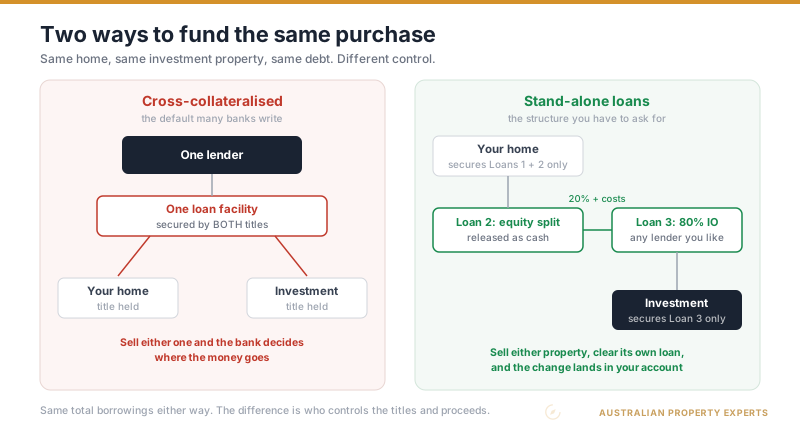
Banks lean toward the crossed version for a simple reason. It gives them more security and a customer who finds it hard to leave.
The sale-day trap
The version of the trap that costs real money works like this.
Say your home is worth $900,000 and your crossed facility covers your home loan and a $600,000 investment property. Years later you sell the investment property, expecting to clear its share of the debt and bank the difference.
With stand-alone loans that is exactly what happens: the sale pays out the investment loan and the rest lands in your account.
Crossed, the bank has a different view. Both titles secure one facility. So the bank decides how much of your $600,000 in proceeds it keeps against the loan before releasing the title. Say your home’s valuation has softened since the loans were written. The bank can hold back far more than you mentally allocated to the investment property, up to all of it, to get back inside its lending ratio. You can walk away from settlement with nothing in hand and a smaller home loan you never asked to pay down.
Four more ways it bites
One soft valuation freezes everything. Crossed loans live and die on the combined position. When you want to release equity for the next purchase, the bank revalues every property in the structure. One weak valuation, even on a property you have no plans to touch, can block the release entirely. Uncrossed, you draw on whichever property has performed.
Refinancing becomes all-or-nothing. Want to move one loan to a lender with a sharper rate? Crossed, there is no “one loan”. You unwind and re-document the whole structure, with new valuations, new applications and discharge queues on every title. Plenty of people look at the paperwork and stay put, which suits the lender.
Your home carries every default. If the investment property hits trouble, a crossed facility gives the lender direct recourse to the family home as security for that same loan. Stand-alone structures do not make your home bulletproof, but they put process and separation between a struggling investment and the house your family lives in.
The mess compounds with every purchase. Two crossed properties are annoying. Four crossed properties are a knot: every purchase, valuation, release and sale touches every title. Investors building a portfolio feel this hardest. Each new purchase depends on releasing equity cleanly from the properties that have grown.
The clean structure
The stand-alone setup that avoids all of the above looks like this:
- Loan 1: your existing home loan, untouched.
- Loan 2: a separate equity-release split against your home, sized inside the bank’s lending ratio. Our usable equity calculator shows what that number is likely to be.
- Loan 3: an 80% loan secured only by the investment property, at whichever lender offers the best terms that day.
Loan 2 hands you the 20% deposit plus purchase costs in cash. From the new lender’s perspective you are a buyer with a cash deposit. Your home’s title never enters the picture. Each property can later be sold, revalued or refinanced on its own numbers. The full sequence, including how the equity release works step by step, is in our guide to using home equity to buy an investment property.
The structure mostly just has to be asked for, usually in writing. “We’ll secure it against both” is the path of least resistance on the bank’s side of the desk.
How to check if you’re already crossed
Pull out your loan offer documents and find the security schedule. If more than one property address is listed as security for the same loan account, you are cross-collateralised. Many investors discover this years after the fact, because the structure changes nothing about repayments. It only shows when you try to move.
Uncrossing is a substitution-of-security or refinance exercise: new valuations, and either your current lender re-documents the loans as stand-alone facilities or you refinance the investment loan elsewhere. There can be discharge fees and, in some cases, break costs on fixed loans. For anyone planning more than one property, a few weeks of paperwork is worth it to keep control of every future sale and release.
Five questions for your broker
If you’re setting up a purchase now, put these to your broker before documents are drawn:
- Is each loan secured by exactly one property? Ask to see the security schedule in draft.
- Is the equity release written as a separate split, not folded into the home loan?
- Can the investment loan sit with a different lender if their terms are better?
- If I sell the investment property in five years, what happens to the proceeds, mechanically?
- If I want to release equity for property two, which valuations does that trigger?
A broker who structures for investors can answer each of these in a sentence, and hesitation on the first one is a warning sign.
Why the structure decides your next purchase
Loan structure is easy to ignore until something goes wrong. Cross-collateralisation fails at sale, at refinance and at the equity release that funds your next purchase. Those are the three moments a portfolio actually depends on. Set the structure up stand-alone from loan one, or unwind it before the next purchase, and every property in your portfolio stays a separate decision you control.
This is general information only and not financial, tax, or credit advice. Loan structuring depends on your circumstances and lender policy. Speak to your mortgage broker and a qualified professional before making lending decisions.
See how we help investors buy with clean structures from day one.
If you’re planning your next purchase and want the structure question sorted before you buy, book a free discovery call.